Tarpon —
The Silver King of the Gulf Coast
Megalops atlanticus. The most prized inshore gamefish on Earth. May through July, a few hundred feet off the Sarasota beach and through Boca Grande Pass, fish in the 80–150 pound class roll, eat live bait, and jump six feet out of the water on the hookset. Here's what you need to know — and how to book the trip.
A Fish
That Changes Anglers
There is no inshore gamefish like a tarpon. The first time one eats your bait and clears the water — six feet of mirror-bright fish, gill plates flared, head shaking — you remember it for the rest of your life. They live 50+ years, swim from Venezuela to Virginia, and most years a few hundred of them stage right off Lido and Siesta Key in May and June. Catching one is a rite of passage on the Gulf Coast.
Tarpon are catchable from Texas to Africa, but the Sarasota–Boca Grande corridor offers a unique combination: warm shallow staging beaches, deep concentrated passes (Big Pass, New Pass, Boca Grande), and decades of captain knowledge of where they roll and when. Trophy fish are realistic; numbers are reliable.
Boca Grande Pass — 30 miles south of Sarasota at the mouth of Charlotte Harbor — is widely called the Tarpon Capital of the World. Concentrated outgoing-tide schools stage in the deep hole there in May and June. Our captain network includes Boca-based captains for dedicated trips on the world's most famous tarpon water.
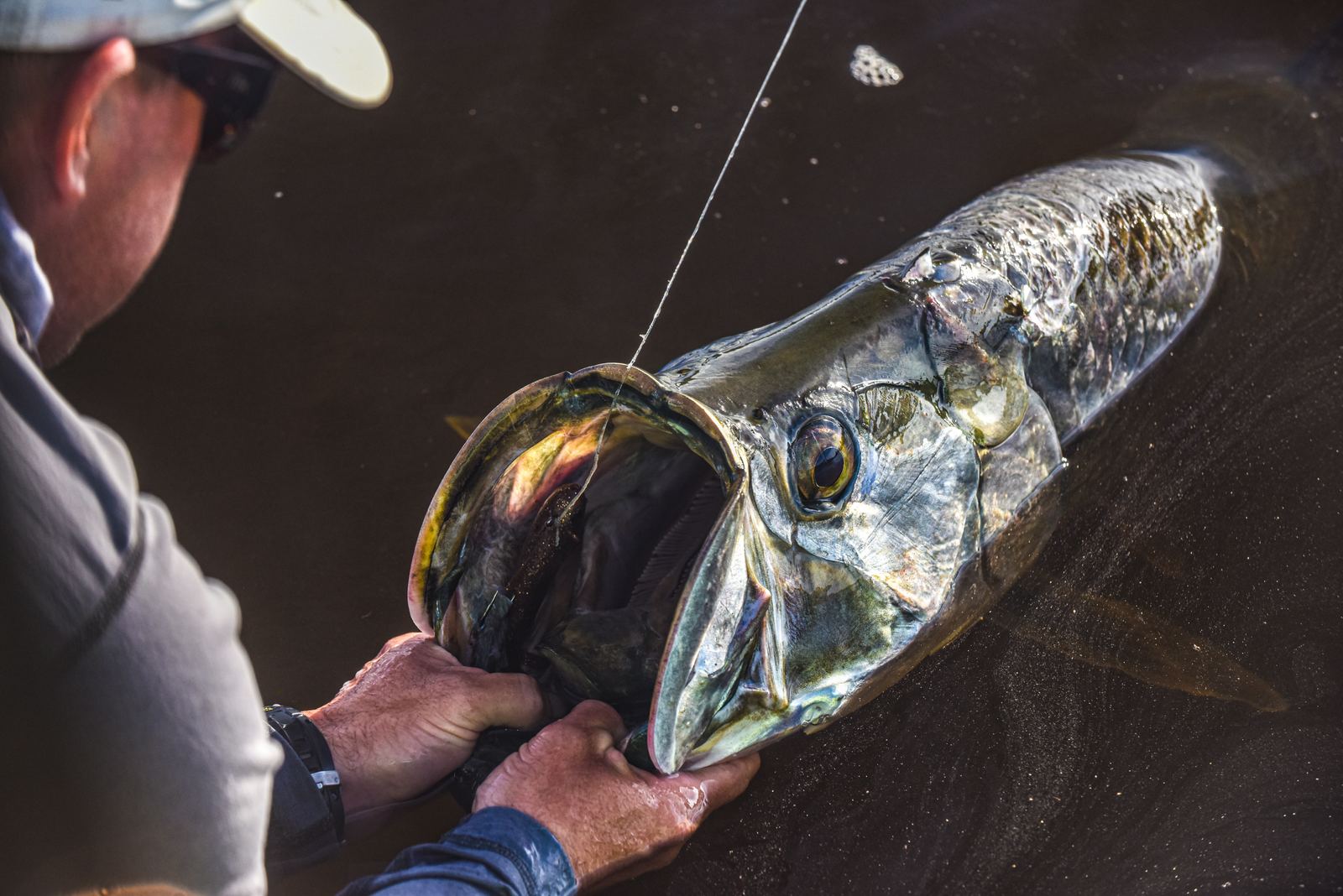
Tarpon are catch-and-release only in Florida. Every fish goes back. Our captains keep fish in the water for photos, support the body horizontally, and revive thoroughly before release — the population needs every fish back swimming.
Biology &
Anatomy
Large, deeply compressed, mirror-bright body. Massive scales the size of poker chips. Distinctive upturned mouth — they feed by inhaling prey from below. The single dorsal fin has a long trailing filament. Adults run 4–8 feet long; the largest fish exceed 200 pounds.
- Range: Nova Scotia to Brazil (western Atlantic) and west Africa coast
- Lifespan: Documented to 60+ years
- Sexual maturity: ~10–13 years (~80 lb)
- Air-breathing: Lung-like swim bladder lets them gulp surface air — that's the famous "roll"
Atlantic tarpon spawn offshore in early summer. The spring migration up the Gulf Coast and down the Florida Atlantic coast stages fish on warmwater beaches and in passes adjacent to deep spawning grounds. Sarasota and Boca Grande sit on the primary corridor — fish move north along the beach, eat heavily on baitfish, and push through the passes on outgoing tides.
- April: First arrivals at Boca Grande Pass
- May–June: Peak concentration, heavy beach feeds
- July: Fish thinning out, late-season window
- Aug–Sep: Most fish gone offshore to spawn
- Oct–Mar: Rare; resident fish only in deep canals
When to Fish
Tarpon
Tarpon fishing in Sarasota and Boca Grande is a tight seasonal window. The fish move through; you don't get a year-round shot. Plan your trip in May or June for the best odds, with April and July as shoulder windows.
Tarpon are offshore or down in the Keys. Resident fish exist in warmwater outflows and deep canals but they're not a target species. Snook, sheepshead, and redfish are the inshore game in winter.
Late April brings the first reliable catches at Boca Grande. Sarasota beaches start producing rolling pods by late month. Fish are scattered, captains scout heavily. Numbers up by the last week.
The window. Hill Tide schools at Boca Grande, daisy chains on the beach, hot bites in Big Pass and New Pass on outgoing tides. Book trips 2–4 weeks ahead — the calendar fills.
July still produces, especially the first two weeks. By August most fish have moved offshore to spawn. Late-season trips trade reliability for solitude — fewer boats on the water.
When Do Tarpon
Arrive in Sarasota?
Mid-to-late April. The first reliable fish show at Boca Grande Pass around April 15–25, Sarasota beach pods build through May, peak fishing runs mid-May through June, and by early August most adults are gone offshore to spawn. Here's the 2026 run, week by week.
| 2026 Window | Stage | Where the Fish Are | The Play |
|---|---|---|---|
| Apr 1 – 15 | Scouts | Charlotte Harbor, first Boca Grande fish | Captains scouting; harbor drifts with crabs and pinfish |
| Apr 16 – 30 | First arrivals | Boca Grande Pass reliable; first Sarasota beach sightings late month | Pass drifts at Boca; glass-calm-morning beach scouting up north |
| May 1 – 15 | Building fast | Beach pods on Lido, Siesta, Longboat; Big Pass staging | May 1 full-moon hill tide opens the Boca crab bite; beach mullet at dawn |
| May 16 – 31 | Peak | Everywhere — beaches, all passes, Boca deep hole | Hill tides off the May 16 new moon and May 31 full moon; book ahead |
| Jun 1 – 15 | Peak | Daisy chains on the beach; heavy pass traffic | Jun 15 new-moon hill tide; fly shots on calm mornings at New Pass |
| Jun 16 – 30 | Peak, tapering | Beach pods thinning north to south; bay fish appear | Jun 29 full-moon hill tide is the last big Boca window of the run |
| Jul 1 – 15 | Late season | Passes and bridges over beaches; bay rollers at dawn | Jul 14 new-moon tide; fewer boats, still real chances |
| Jul 16 – 31 | Fading | Bridges, deep bay holes, scattered beach singles | Night bridge fish on live shrimp and pinfish; go early |
| Aug – Sep | Offshore spawn | Adults offshore; juveniles in creeks and bayous | Swap to the juvenile backcountry program — 6-wt fly in the creeks |
2026 season markers: the World's Richest Tarpon Tournament runs at Boca Grande May 13–14, and the 92nd Suncoast Tarpon Roundup — the world's longest-running tarpon tournament — spans the May–July window, alongside the season-long Sarasota Tarpon Tournament. Full dates on our 2026 tournament calendar. Every event is all-release.
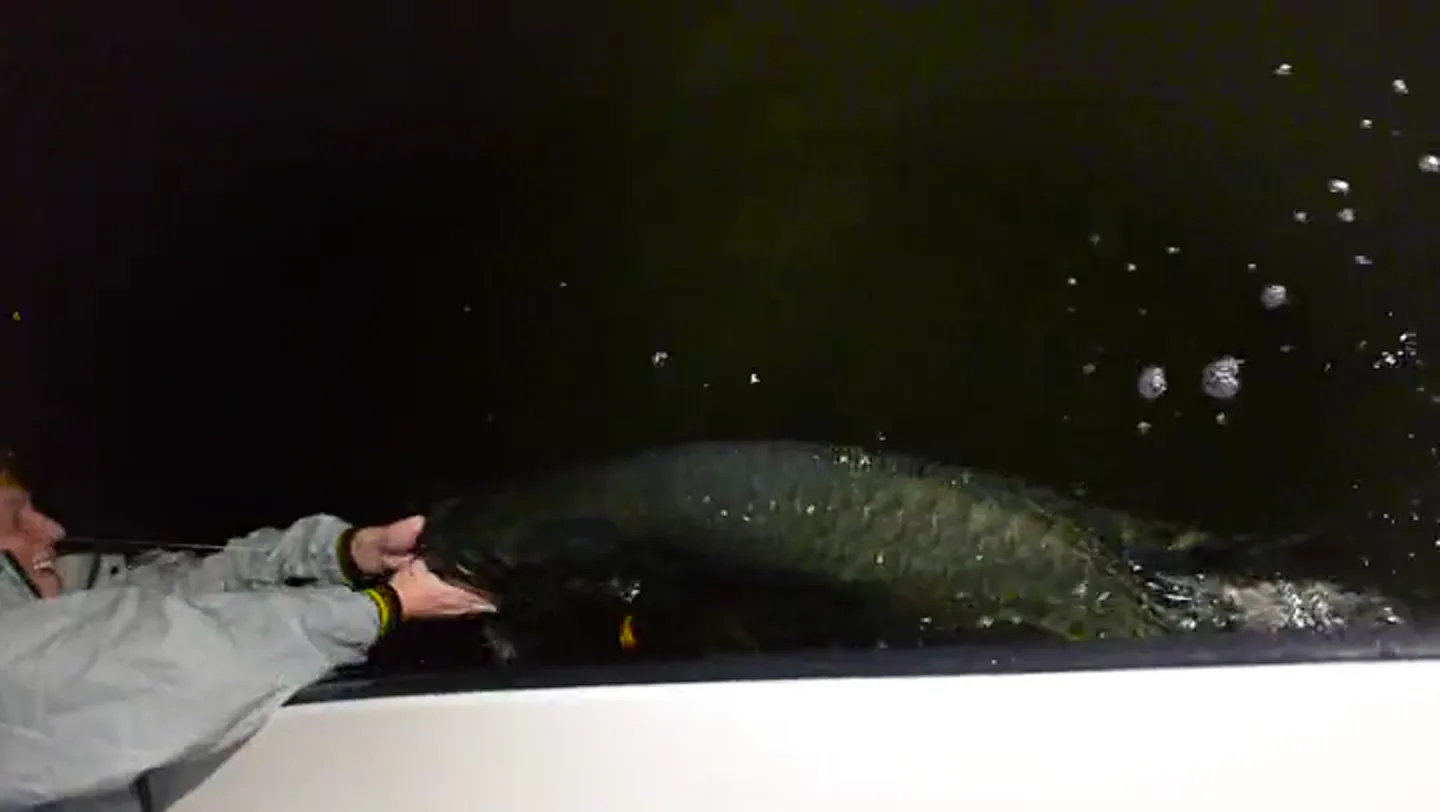
Two hands on the leader in the dark — the last thirty seconds of a tarpon fight.
Where We
Find Them
Three primary patterns: deep passes on tide changes, the surfline at first light, and the Boca Grande Pass deep hole during peak season. Each requires a different boat position, bait choice, and presentation. Our captains pick the pattern based on conditions on your day.
The deep hole between Gasparilla Island and Cayo Costa where Charlotte Harbor empties. Concentrated outgoing-tide schools in May and June. Hill Tides — the outgoing tides during full and new moons — produce the most legendary bites. Best for live mullet free-line, live crabs, and big jigs in the deep hole.
The cut between Lido Key and Siesta Key. Tarpon stage at the mouth on outgoing tides in May and June and feed actively as bait gets pushed out of the bay. The channel edges and the rock jetties hold fish. Ideal for live bait free-lined or a weighted egg-sinker rig.
The pass between Lido Key and Longboat Key. Smaller and less pressured than Big Pass, with similar tarpon staging behavior in season. Excellent for fly anglers — the cleaner water and lighter boat traffic make sight casting more reliable on calm mornings.
The beach pattern: Don't overlook the surfline. From the last week of April through June, daisy chains and rolling pods of tarpon move along the Gulf-facing beaches of Lido, Siesta, and Longboat, often within 100 feet of the first sandbar. A quiet boat, polarized glasses, and a long cast with a live mullet can put you on a 100-pound fish before 7 a.m.
Where, When & How —
Tarpon Spots from Bradenton to Boca
Twelve named tarpon spots from Anna Maria Island down to Boca Grande Pass — color coded by habitat (passes, beaches, backcountry flats, harbor). Click any marker to see the spot's peak months, ideal tide stage, the bait we run there, and how to access it. Built on satellite imagery so you can read the structure of each pass and pick lines for yourself.
Coordinates are approximate. Always verify GPS marks against current NOAA charts and check FWC regulations before fishing. Imagery © Esri.
What Is
a Hill Tide?
A hill tide is the extra-hard outgoing tide in the 3–4 days after a full or new moon. Charlotte Harbor drains billions of gallons through Boca Grande Pass on those falls, flushing pass crabs to the surface — and the staging tarpon feed like it's the last meal of the year.
Plan around the strong outgoing tides in the days following each moon during the run. The 2026 dates that matter:
- May 1 — full moon (season-opening push)
- May 16 — new moon
- May 31 — full moon (blue moon · peak week)
- June 15 — new moon
- June 29 — full moon (last big Boca window)
- July 14 — new moon (late-season shot)
Pull the predictions for your water before you commit a morning. The bigger the fall between high and low, the better the pass bite:
- NOAA 8725577 — Port Boca Grande, Charlotte Harbor
- NOAA 8726034 — Siesta Key, Big Sarasota Pass
- NOAA 8726083 — Sarasota, Sarasota Bay
- Our tide station guide maps all ten local stations and how to read each stage
Why it works: pass crabs ride the falling water out of the harbor in surface current lines. The tarpon staged in the Boca Grande deep hole rise and eat them — which is why a free-lined live crab on a hill tide afternoon is the single most reliable bite of the season. The same moon math scales down to Big Pass, New Pass, and Longboat Pass: stronger outgoing, better bite.
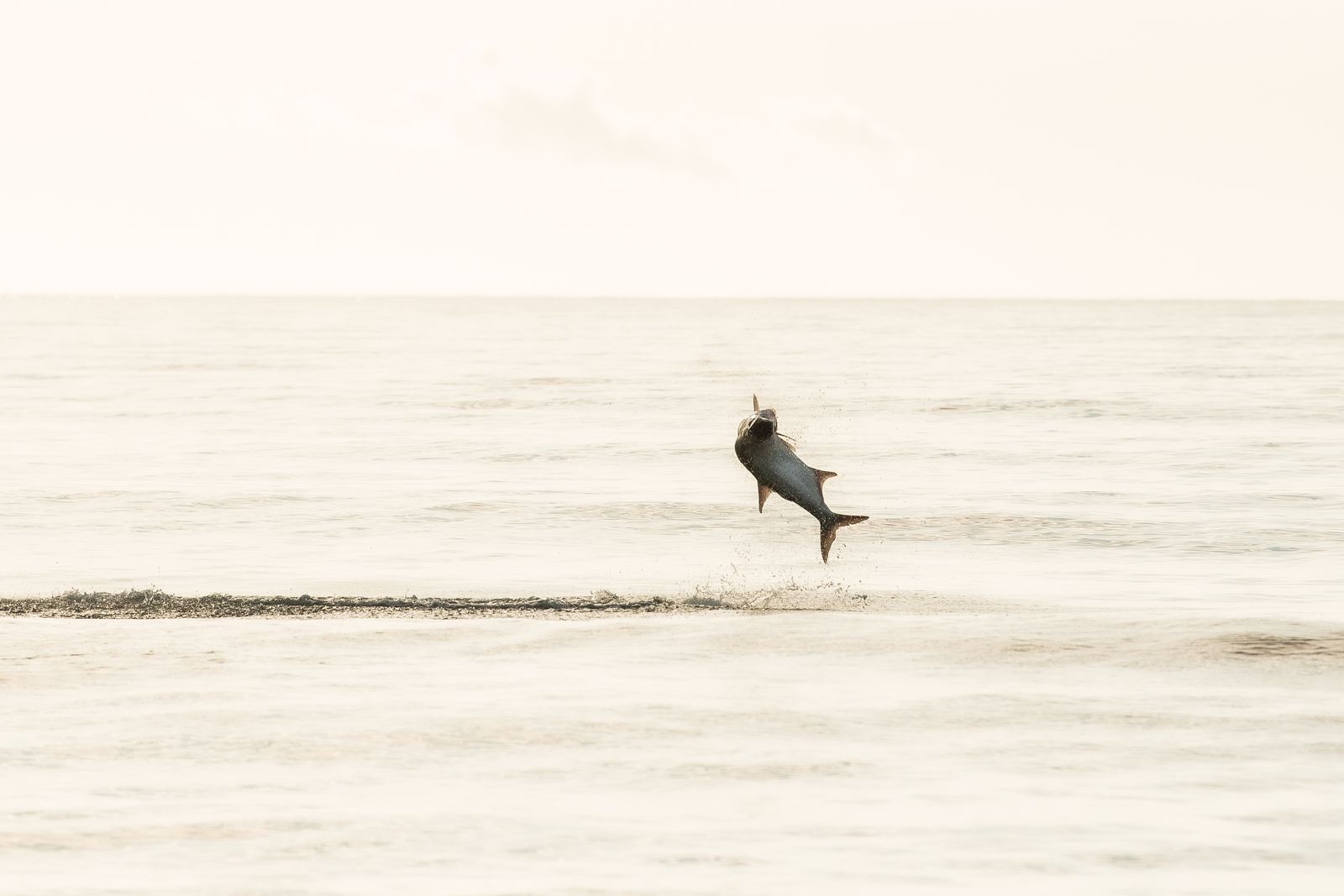
Hooked, they go airborne — and that is where most of them are lost
Bait Techniques
for Tarpon
Tarpon are visual feeders that key on natural prey movement. The captain matches bait to conditions: live mullet for big fish, threadfin or pinfish for finicky fish, live crabs at Boca Grande on outgoing tide. Hooking method matters as much as bait choice.
An 8–12″ live mullet, back-hooked just in front of the dorsal fin on a 7/0–8/0 circle hook, drifted on a 5-foot 60-lb fluorocarbon leader behind a barrel swivel. Cast past a rolling pod, let the mullet swim to the strike zone. The fish approaches from below and inhales the bait. Wait for the line to come tight — don't set the hook on a circle.
Setup: 50–60 lb braid → barrel swivel → 5 ft 60 lb fluorocarbon → 7/0–8/0 in-line circle → live mullet, back-hook.
Pass crabs (live, palm-sized, captured at the surface in current lines) free-lined on a 7/0 circle through one of the corner points of the shell. The single most iconic Boca Grande tarpon technique. Effective in the deep hole on outgoing tide because crabs ARE what the staging tarpon are eating — flushed out of the bay on the dropping tide.
Note: Crab availability peaks during Hill Tides (full and new moon outgoings). Captains capture them with long-handled dip nets while running the channel.
On days when tarpon are present but won't commit to mullet, drop down to a 5–7″ live threadfin or pinfish on a 5/0–6/0 circle hook. Smaller bait, faster swim action, often gets a tighter eat. Pin-hooked through both nostrils for free-line presentations or back-hooked for free-fall.
Where strong current keeps live bait too high in the column to reach the staging fish, switch to a cut mullet head on a 8/0–10/0 circle hook below a 4–8 oz egg sinker. The head sits on the bottom in the strike zone where outgoing-tide tarpon hold. A traditional Boca Grande technique that still produces big fish.
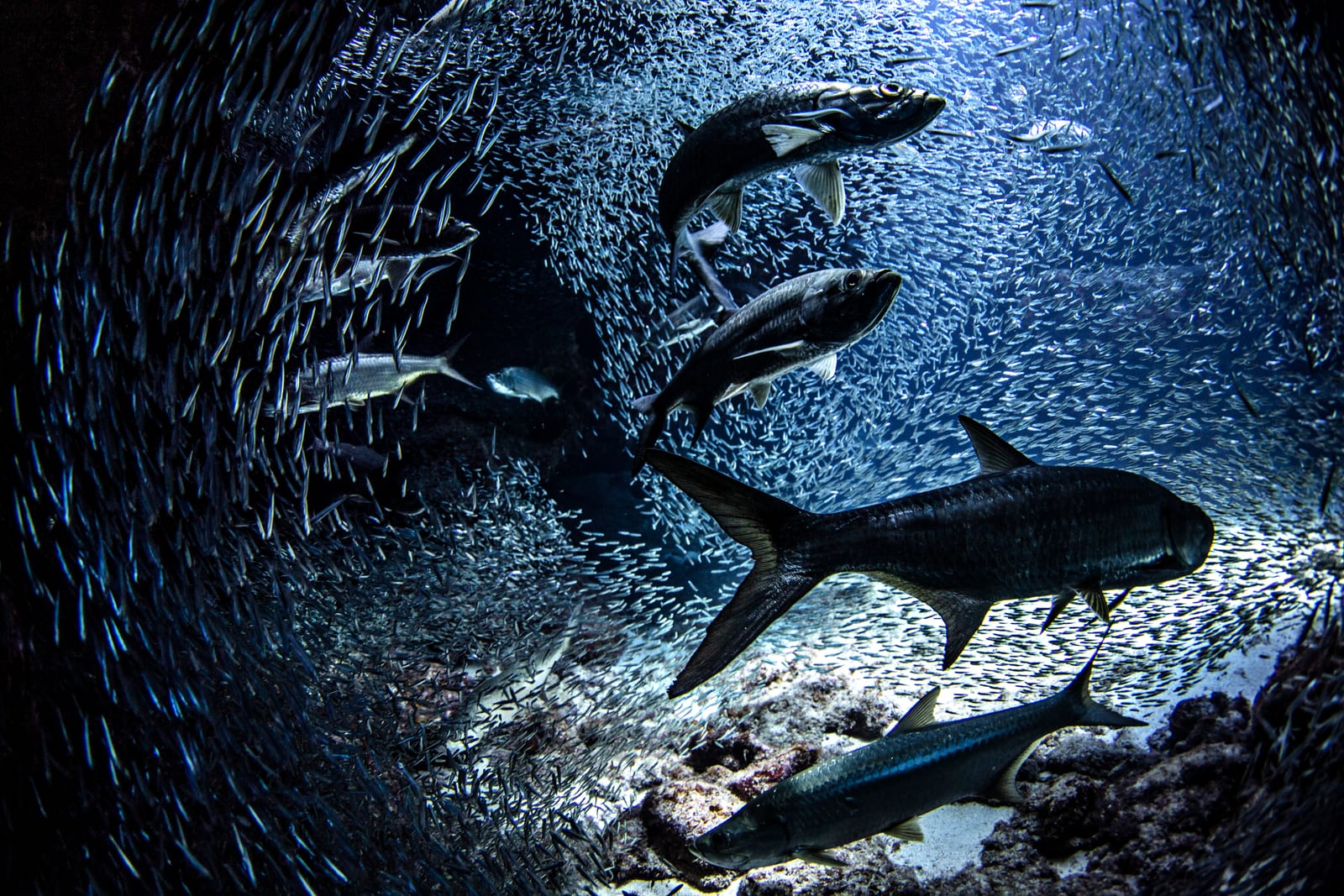
Find the bait, find the fish — tarpon feed inside the school
Lure &
Fly
Tarpon will eat artificial — and on the right day, eat them aggressively. The choice between lure and fly is mostly about the experience you want and the conditions on the water. Both are 100% catch and release; both demand precise presentations.
Lure Fishing
Soft-plastic swimbaits (5–7″) on heavy jigheads, large topwater plugs at first light, and white bucktail jigs deep in passes are the productive Sarasota lure choices. The key is matching the swim profile of natural prey — slow, steady, deliberate.
- Topwater plugs: Sunrise on the beach over rolling pods
- Soft swimbaits: Mullet imitations free-lined in passes
- Bucktail jigs: Boca hole, jigged on the bottom
- Lipped diving plugs: Trolled along beach edges
Fly Fishing
12-weight rod, intermediate or floating line, hand-tied tarpon flies (Black Death, Toad patterns, EP Mullet) in 3/0–5/0. Sight-cast to laid-up or rolling fish from a poled flats skiff. The most rewarding way to catch a tarpon — and the most demanding. Not a first-timer pursuit.
- Rod: 12-wt with anti-reverse reel
- Leader: 60 lb butt → 16 lb class → 60 lb shock
- Patterns: Black/purple in low light, tan/white midday
- Conditions: Calm wind, clear water, sunlit fish
Can You Catch Tarpon
on Spinning Tackle?
Yes — spin plus live bait is how 8 out of 10 Sarasota tarpon get caught. An 8-foot heavy spinning rod, a 6000–8000 reel with 50–65 lb braid, and a live crab or threadfin will out-fish fly gear on all but the calmest days. It's the program we put first-timers on.
- Rod: 8' heavy spin, fast action
- Reel: 6000–8000 size, smooth 25+ lb drag
- Line: 50–65 lb braid, high capacity
- Leader: 5–6 ft of 60–80 lb fluorocarbon
- Hook: 6/0–8/0 in-line circle
Dawn on the beach looking for rolling pods — a sight-fishing game with a live bait delivery. Cast the crab or threadfin 10 feet ahead of the lead fish, let it sink, come tight when the line jumps. Mid-morning, shift to the passes and drift the outgoing tide.
When adults leave in August, 12–30″ juveniles stay in Phillippi Creek, Hudson Bayou, and Whitaker Bayou nearly year-round. A 3000 reel with 20 lb braid — or a 6-wt fly rod — and small live shrimp turns the backcountry into a numbers game. Every spot is on the map above.
Spin vs. fly, honestly: a spin angler on live bait gets 3–5x the eats of a fly angler on the same water. Fly is the purist's path — see the fly section above and our fly fishing guide — but if the goal is jumping your first tarpon, book the spin and live-bait trip.
Tackle &
What to Bring
Every tackle item below is provided by the captain. The list is here so you know what's on the boat — and so you can match it if you want to bring your own favorite outfit.
Provided on Every Charter
- 50–80 lb class spinning rods (8'–8'6″)
- Saltwater spinning reels (5500 size, 80 lb braid)
- 60–100 lb fluorocarbon leader material
- 7/0–10/0 in-line circle hooks (Owner, Mustad)
- Live bait — mullet, threadfin, crabs as available
- Cooler with ice for drinks
- Fishing license coverage (captain's charter license)
- USCG-compliant safety gear, first aid
What You Bring
- Reef-safe sunscreen (SPF 30+)
- Polarized sunglasses (no exceptions — you need them)
- Sun hat or buff
- Non-marking soft-sole shoes
- Snacks and drinks (no glass)
- Camera or pro photo/video add-on
- Cash for tips (industry standard 15-20%)
- Strong arms and a willingness to fight
What Tarpon
Actually Eat
| Bait | Rating | Best Conditions | Best Spots |
|---|---|---|---|
| Live Mullet (8–12″) | ★★★★★ | Beach pods, pass tides | Big Pass, New Pass, beachfronts |
| Live Pass Crabs | ★★★★★ | Hill Tide outgoings | Boca Grande Pass deep hole |
| Live Threadfin / Pinfish | ★★★★★ | When mullet not producing | All passes, beach pods |
| Cut Mullet (head) | ★★★★★ | Heavy current, deep hole | Boca Grande, Big Pass channel |
| Soft Swimbaits (artificial) | ★★★★★ | Sight-fishing rolling pods | Beach, calm mornings |
| Topwater Plugs (artificial) | ★★★★★ | First light, calm surface | Beach pods at sunrise |
| Tarpon Fly (12-wt) | ★★★★★ | Calm, clear, sunlit | Backcountry laid-up fish, beach |
Records &
Stats
"First-time client books a 6-hour. Hour two, they hook a 110-pound tarpon in the mouth of Big Pass. Forty-five minutes later, the fish is at the boat — three jumps, one near-spool, the angler is shaking. We get the leader, snap a photo, the captain revives the fish, off it goes. They're crying. They book another trip on the spot. That's tarpon. That's why people fly to Sarasota in May."
— A Sarasota.Fish captain, May 2024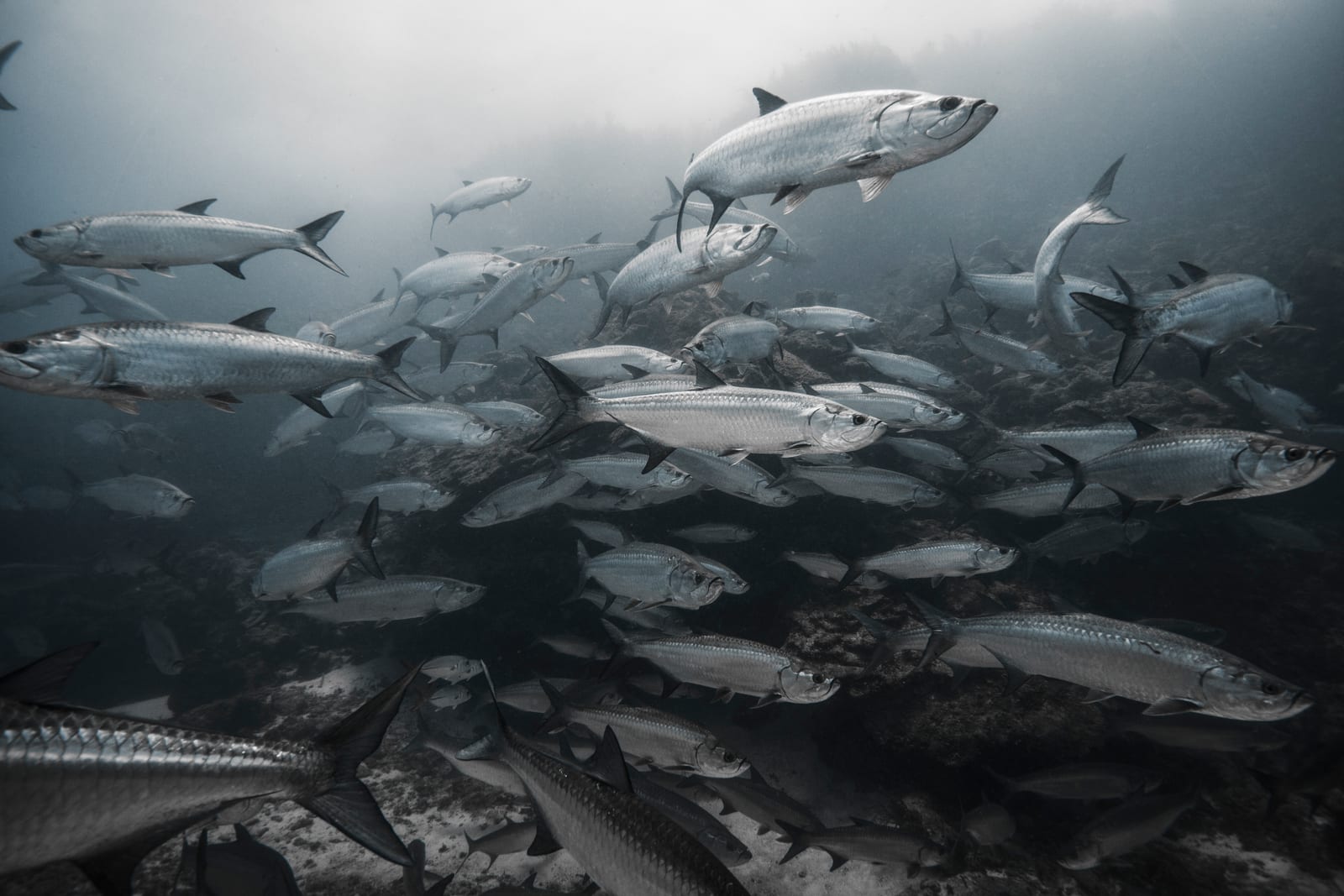
They travel in numbers — one string of fish changes the whole day
From the Boat —
Real Sarasota Tarpon
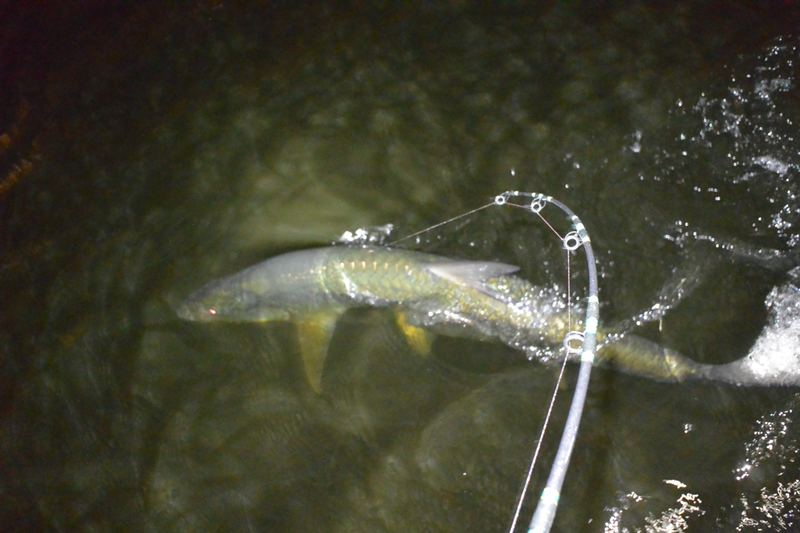
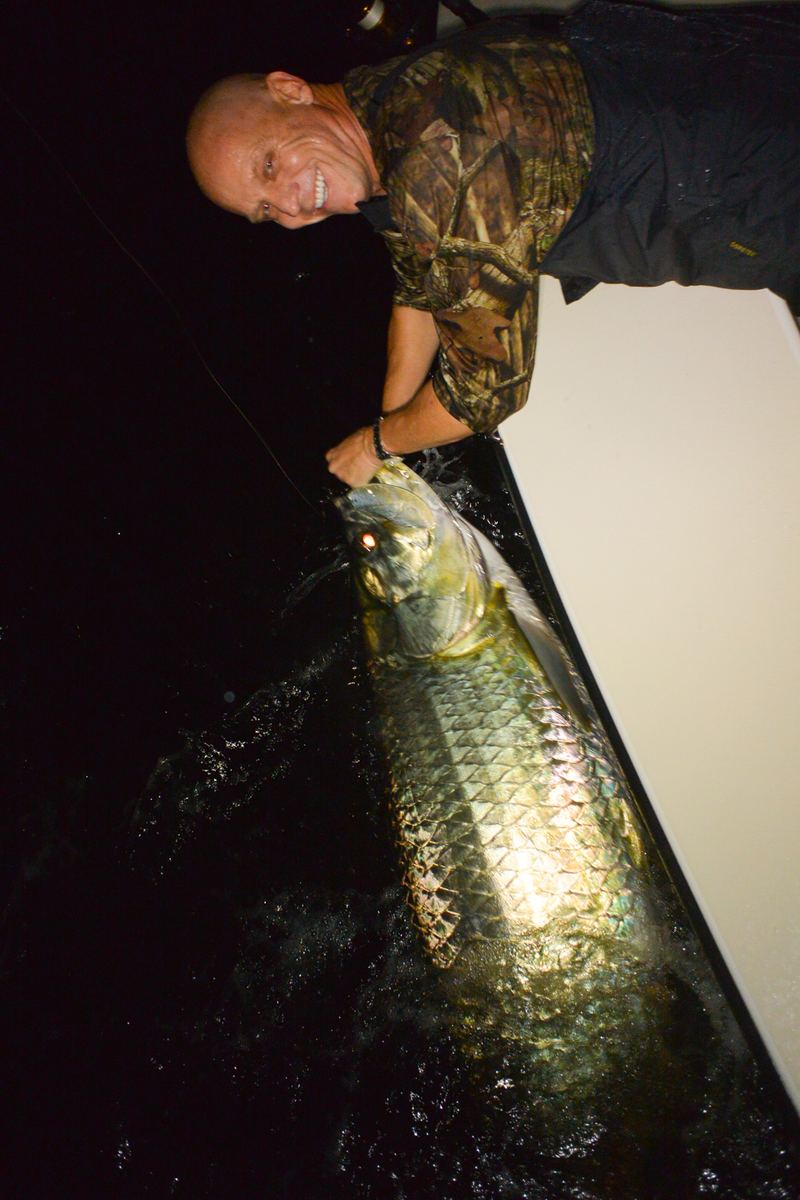
Hero shots and night catches from our captains and from anglers we've put on fish. Every fish in this gallery was released after the photo.
The Best Tarpon Video
on the Internet
18 public videos from 17 channels, sorted by subject. Nothing plays until you click it.
Boca Grande Pass
8The deep pass at the mouth of Charlotte Harbor, about ninety minutes south of Sarasota, and the most concentrated tarpon fishery in the world through May and June.

Bow To The King! Tarpon Fishing Boca Grande

Tarpon Fishing Boca Grande with 40 Year Legend Captain Robert Mccue Gulf Spawn + Hill Tide Fishing

Fishing For 200lb Tarpon in Boca Grande Pass - LIVE

Boca Grande Fishing for Tarpon Fish on the Beach

Tarpon Fishing the World Famous Boca Grande Pass!!!

HUGE TARPON! Night fishing Boca Grande Pass!
Tarpon Fishing Boca Grande: The Most Insane Experience!

Fishing for Tarpon in Boca Grande Pass Bumper Boat Style!
Sarasota & the Gulf Beaches
3Our own stretch of coast — Anna Maria south through Sarasota — plus the statewide reports that cover it once the beach run is on.

Tarpon Fishing 2024: Catching 140lb Florida Tarpon w Threadfin (Multi-Day Grind) Anna Maria Island

Best Sarasota Fishing Spots
Big Tarpon Action Across Florida! | Florida Insider Fishing Report S22 E7
How-To & Technique
5Bait presentation, the fly game, and the one skill every tarpon angler has to learn: bowing to the king when the fish goes airborne.

How to Catch Tarpon Off the Beach (Live Baits & Floats)
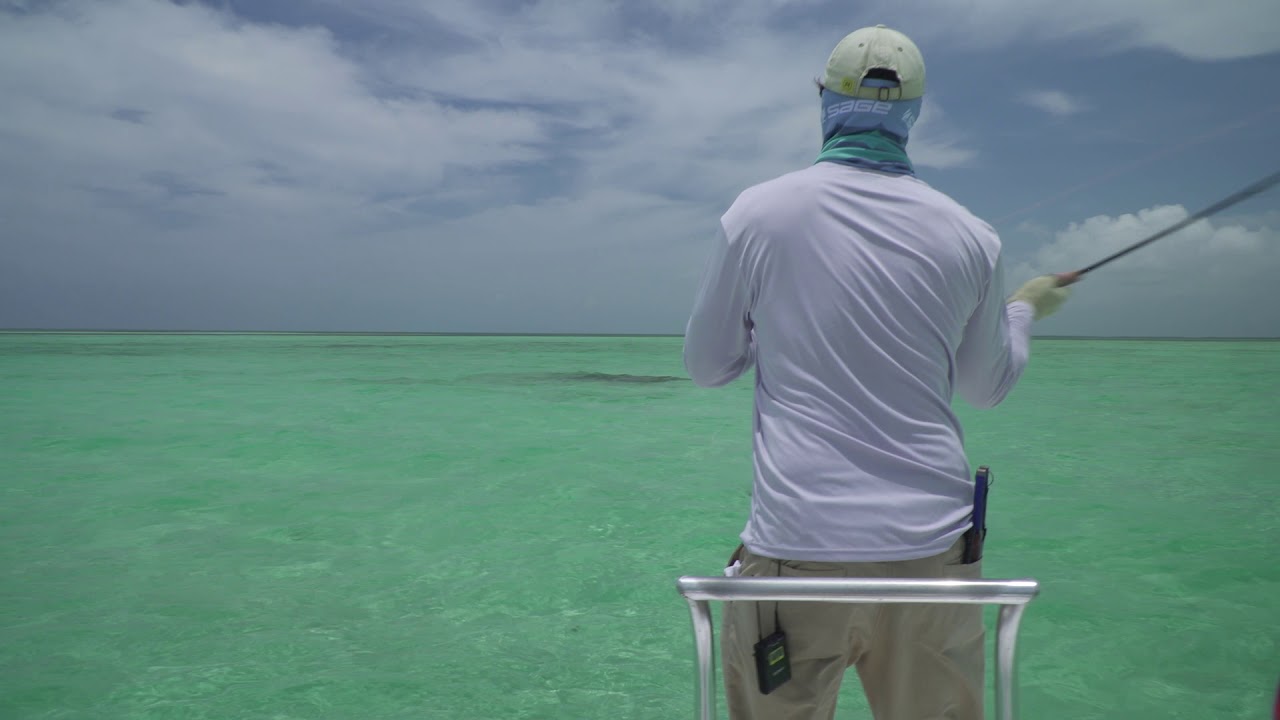
S3 E6 How To Fly Fish For Tarpon

Tarpon fishing 101: Bow to the King

Flyfishing for Tarpon - The Silver King !

You Got The Silver | Fly Fishing for Tarpon
Biology & Science
2Tarpon are one connected population ranging the whole Gulf and Caribbean. These come from the research organisations that tag and track them.

Bonefish and Tarpon Populations are Interconnected
Bonefish & Tarpon Trust A Fisheries Case Study (Wilson)
Tarpon Reports
& Stories
Latest tarpon-tagged posts from our captains. Fishing reports, conditions, peak windows, and stories from the boat — published as the season unfolds.
What Are the 2026
Tarpon Rules?
One rule covers 99% of anglers: every tarpon goes back. Florida made tarpon catch-and-release only, the single exception is a $51.50 record-pursuit tag, and any fish over 40″ must stay in the water. Boca Grande Pass carries extra gear rules in April–June. The 2026 rules, verified against FWC:
| Rule | 2026 Regulation |
|---|---|
| Harvest | Prohibited — catch-and-release only, statewide, all year |
| Tarpon tag | $51.50/year, tax collector offices only, one per person per year, valid only in pursuit of an IGFA world or Florida state record |
| 40″ rule | Tarpon over 40″ fork length must remain in the water at all times — photos and measurement included |
| Gear (statewide) | Hook-and-line only when targeting tarpon; no multiple hooks with live or dead natural bait; no snagging |
| Boca Grande Pass · Apr–Jun | No breakaway gear; max 3 fishing lines deployed per vessel at any one time |
| Boca Grande Pass · year-round | Any rig where the weight hangs lower than the hook when suspended vertically is prohibited; banned gear aboard must be stowed |
Last reviewed 2026-07-18 against the FWC tarpon page and the FWC tarpon & Boca Grande gear FAQ. Rules change — verify before you fish. How Florida regs work in general: our FWC regulations guide and license guide.
Best release practices: Fight the fish quickly with appropriate tackle. Keep the fish in the water — never lift a tarpon over 40″ out of the water. Support the body horizontally with both hands during photos. Revive by holding the fish facing into the current until it kicks free under its own power. Tarpon populations are slow to mature (10+ years to spawn) and every released fish matters. Full technique: our catch-and-release guide.
External Resources
- FWC — Tarpon Regulations Current rules, license requirements, special regs
- IGFA — World Records Atlantic tarpon all-tackle and line-class records
- Bonefish & Tarpon Trust Tarpon research and conservation
- NOAA Tide Predictions — Port Boca Grande (8725577) Hill Tide windows for Charlotte Harbor
- Suncoast Tarpon Roundup 92nd year · world's longest-running tarpon tournament
- Sarasota Tarpon Tournament Season-long all-release event on Sarasota waters
Tarpon FAQ
When do tarpon arrive in Sarasota in 2026?
Late April. The first reliable fish show at Boca Grande Pass in mid-to-late April, Sarasota beach pods build through May, and peak fishing runs mid-May through June. By early August most adult fish have moved offshore to spawn. Juveniles hold in backcountry creeks nearly year-round.
When is the best time to fish tarpon near Sarasota?
May through July is the absolute peak. Fish in the 80-150 pound class start staging on the beach and through the passes in late April, peak through mid-June, and stay catchable into July. By August, most fish have moved out — late-season trips can still produce, but May-June is the window.
What is a hill tide?
A hill tide is the extra-strong outgoing tide that follows a full or new moon. At Boca Grande Pass these hard-falling spring tides flush pass crabs out of Charlotte Harbor and trigger the most concentrated tarpon feeds of the year. In 2026 they fall around May 1, May 16, May 31, June 15, June 29, and July 14.
What are the Boca Grande Pass gear rules?
FWC rules for Boca Grande Pass: in April, May, and June no breakaway gear may be used and a vessel may deploy no more than three lines at a time. Year-round, any rig where the weight hangs below the hook when suspended vertically is prohibited in the Pass — banned gear must be stowed. Fishing is hook-and-line only.
Where is Boca Grande Pass and why does it matter?
Boca Grande Pass is the deep cut between Gasparilla Island and Cayo Costa, about 30 miles south of Sarasota at the mouth of Charlotte Harbor. It is widely called the Tarpon Capital of the World — concentrated outgoing-tide schools of tarpon stage in the deep hole there in May and June. Our network includes captains based out of Boca Grande for dedicated trips.
How big do tarpon get in Florida?
The IGFA all-tackle world record is 286 pounds, 9 ounces (Guinea-Bissau, 2003). Florida's state record is 243 pounds. Realistic Sarasota and Boca Grande catches range from 60 to 180 pounds, with typical fish in the 80-130 pound range. Anything over 150 pounds is a trophy.
Can you keep a tarpon in Florida in 2026?
No — tarpon in Florida are catch-and-release only, with one narrow exception: a $51.50 annual tarpon tag (sold only at tax collector offices, one per person per year) allows keeping a single fish in pursuit of an IGFA world or Florida state record. Every other tarpon must be released, and fish over 40 inches must stay in the water.
Do I need experience to catch a tarpon?
No — most of our tarpon clients are first-time tarpon anglers. The captain handles boat positioning, bait selection, and rigging. Your job is to follow instructions, hold on, and stay on the fish through the jumps. That said: tarpon fights are physically demanding (often 30-90 minutes), so be ready for a workout.
What tackle does the captain provide?
Everything. Heavy spinning or conventional rods (50-80 lb class), high-capacity reels with 50-80 lb braid and 60-100 lb fluorocarbon leader, the right circle hooks for the bait used that day, and live bait (mullet, threadfin, or crabs depending on conditions). All you bring is sun protection, water, and a willingness to fight a big fish.
How much does a tarpon charter cost?
Rates vary by captain, vessel, trip length, and group size. Tarpon trips are typically 6-8 hours and priced higher than standard inshore due to the specialized gear and bait. Call or text 941-294-4144 for current rates and availability.
Can I sight-fish tarpon on the fly?
Yes — our fly captains run dedicated fly trips during peak season targeting rolling pods on the beach and laid-up fish in the backcountry. 12-weight rod, intermediate or floating line, hand-tied tarpon flies. Spot-and-cast presentations only; not for first-timers but the most rewarding way to catch a tarpon.
Can you catch tarpon from shore in Sarasota?
Yes, at specific spots: the South Lido side of Big Pass, the Venice jetties, and the Longboat Pass and Ringling bridge catwalks all give shore anglers a real shot from May through July. A live mullet or pinfish free-lined into moving water at first light is the play. Landing a 100-pound fish from shore is the hard part — go heavy and be ready to walk.
Tarpon by Technique
Tarpon by Location
Read the local rundown →
Read the local rundown →
Read the local rundown →
Read the local rundown →
Read the local rundown →
Read the local rundown →
Read the local rundown →