Nearshore Fishing
Charters.
Gulf fish without the long ride. Tripletail on the trap buoys, mackerel on the run, cobia on the markers, and sharks on the reefs — 20 minutes off the beach.
Gulf Species,
Short Ride Out.
Nearshore fishes the strip of Gulf from just off the sand to 9 miles out — 20 to 45 feet over artificial reefs, ledges, and the stone-crab trap lines. It's the middle ground between the bay and the deep: real Gulf fish — tripletail, mackerel, cobia, snapper, sharks — with a 15- to 30-minute run instead of a two-hour one.
- Fishing license coverage for everyone aboard
- Light spinning and conventional tackle
- Live bait and chum
- Ice
- Fish cleaning and bagging of legal catch
Typical for this trip type — the exact list is the captain's and is confirmed when you book.
Ranges are ballparks, not quotes — season, species, group size, and fuel all move the number. Call or text us for an exact quote on your dates.
The Nearshore Line-Up.
Tripletail, mackerel, cobia — the pelagics and reef fish that stack inside 9 miles. Tap any fish for the full guide: seasons, the ever-changing FWC rules, and exactly how we target it.
Tripletail
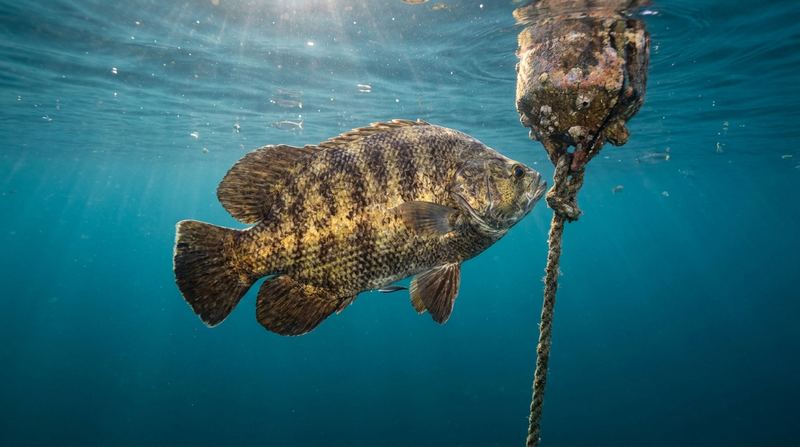
The signature nearshore fish. Every stone-crab trap buoy Oct–May holds a tripletail lying on its side like a scrap of debris. Spot it, pitch a live shrimp, and hang on — pound for pound one of the hardest pulls off the beach.
Open the Tripletail guide →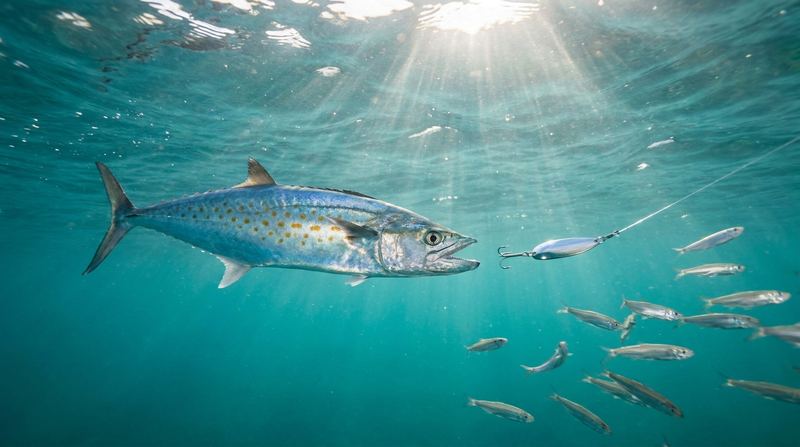
Spanish Mackerel
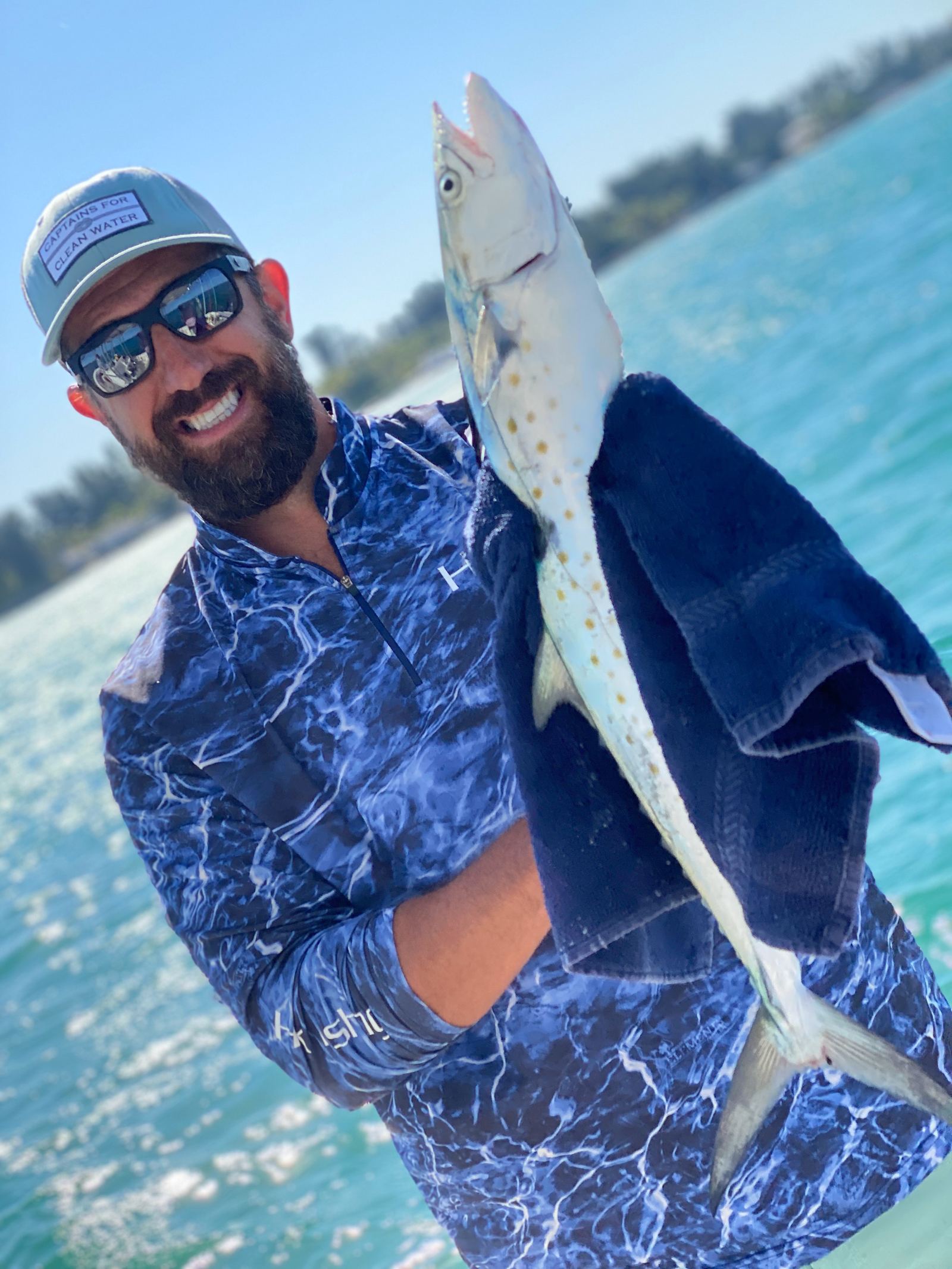
Fast, toothy, and everywhere the bait is. Spring and fall the Spanish run the beach edge in schools — burn a spoon or a Gotcha through them and the light tackle sings. The most action-per-hour fish nearshore.
Open the Spanish Mackerel guide →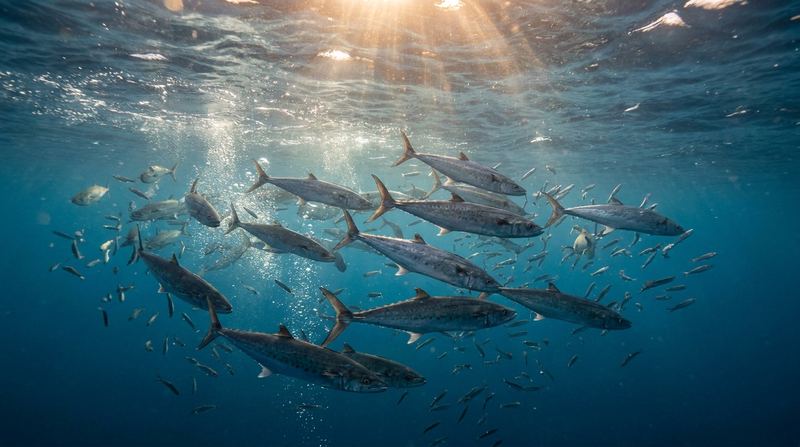
King Mackerel
The bigger cousin. Smoker kings run the reefs and bait schools in the spring and fall pushes — slow-troll a live bait and wait for the reel to scream on a 20-pound run. Nearshore’s biggest surface pull.
Open the King Mackerel guide →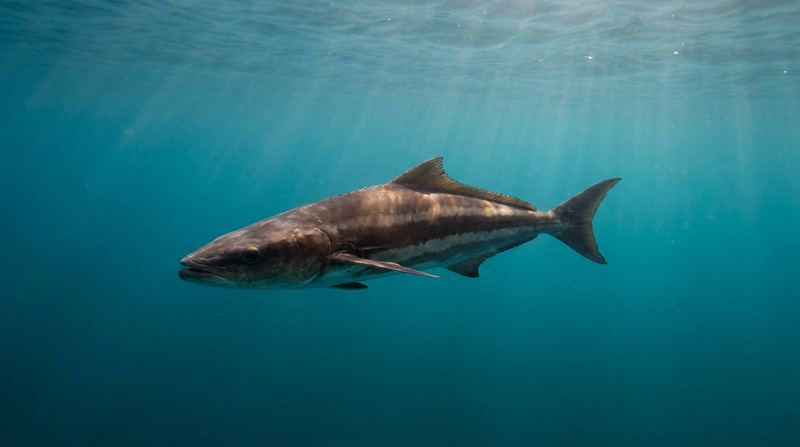
Cobia
Curious, brown, and brutal. Cobia cruise the markers, reefs, and the backs of rays — pitch a big jig or a live eel at a cruiser and hold on. One of the hardest-fighting fish you can put in the box.
Open the Cobia guide →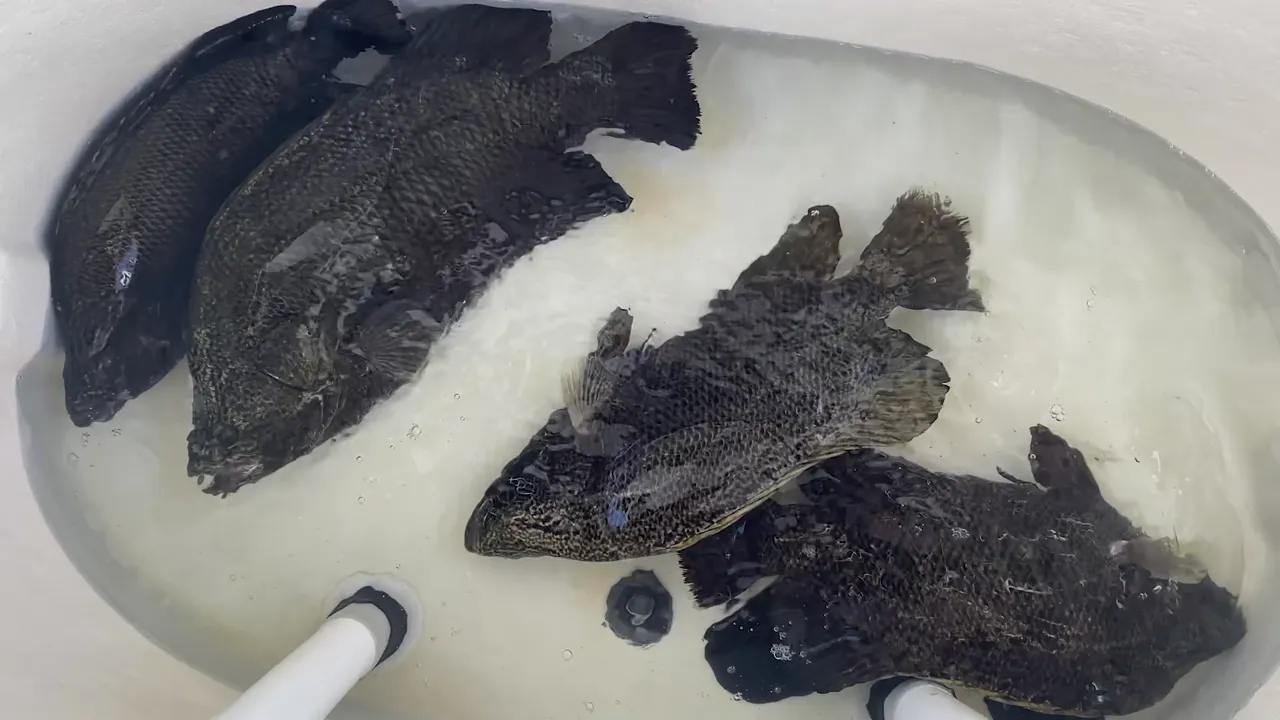
Sight-cast a live shrimp to a fish sunning on a trap buoy.
Fast Fish,
Light Tackle, All Day.
When the Spanish and kings push the beach in spring and fall, the bite is nonstop. Find a bait school working the surface, burn a spoon through it, and every cast is a hookup. It's the most action-per-hour trip on the coast — light spinning gear, screaming drags, and fish in the box for dinner.
Kids who've done a bay trip love it: the runs are short, the pulls are hard, and something's always chewing. When the bait's thick, so is the fun.
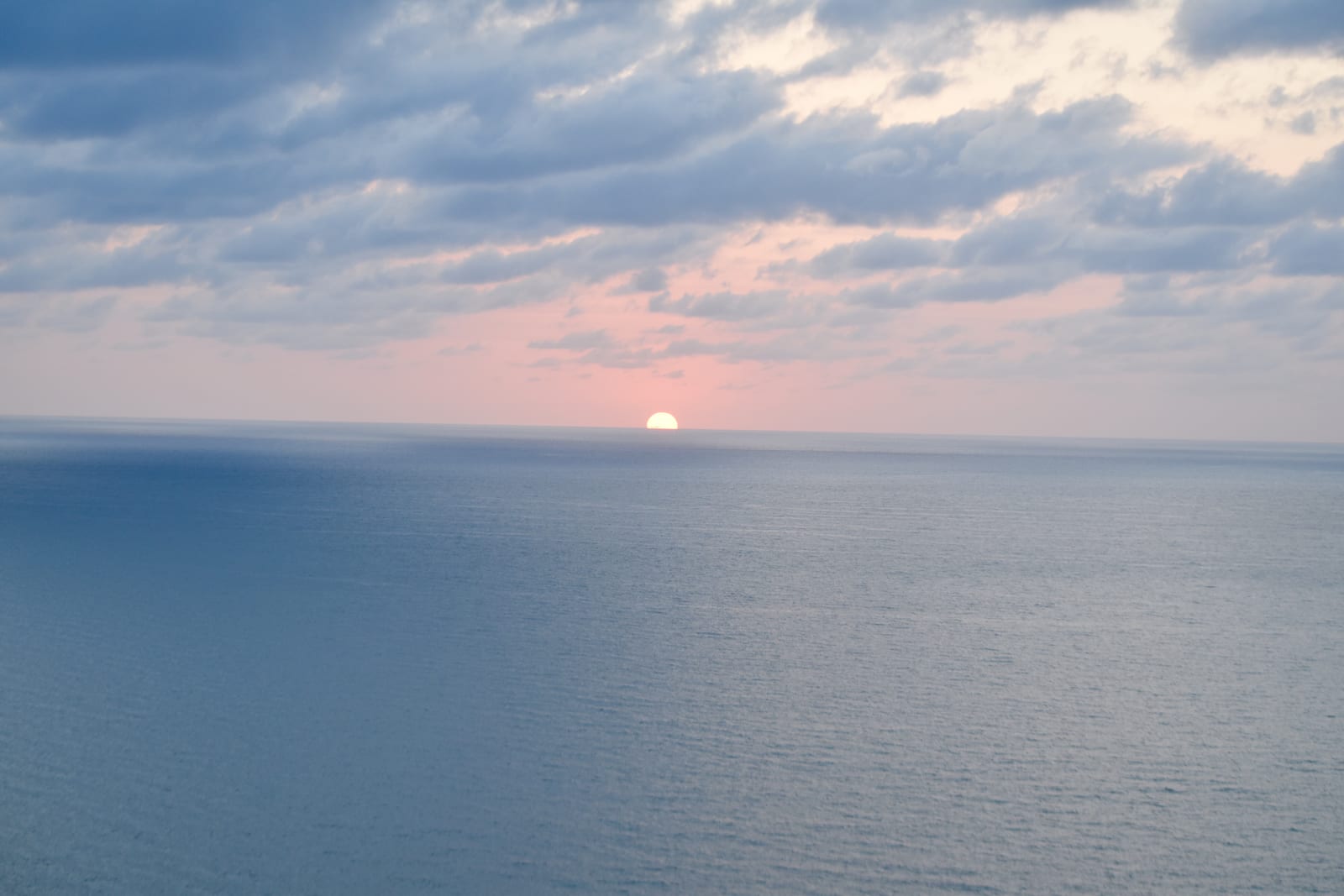
Clear the pass, and the reefs are minutes away.
Everything About
a Nearshore Day.
A nearshore charter fishes Gulf water from just off the beach to 9 nautical miles out — 20 to 45 feet deep — hitting artificial reefs, ledges, and the stone crab trap lines for tripletail, king mackerel, cobia, Spanish mackerel, and sharks. It runs $500–$700 for a private half day in 2026 and delivers Gulf-species action with a 20-minute boat ride instead of a two-hour one.
Ranges, not quotes — season, species, weather, group size, and fuel all move the number. Call or text us for an exact quote on your dates.
What is nearshore fishing off Sarasota?
The strip of Gulf inside 9 miles is the busiest fish highway on this coast. Manatee County maintains reefs from One Mile Reef (20 ft) out to the Seven Mile reefs (40 ft); Sarasota County’s M-series line starts about 6.5 miles off Big Pass in 40 feet. Coordinates are public — see the Manatee County artificial reef program and the FWC statewide reef locator.
| Target | Where | When |
|---|---|---|
| Tripletail | Stone crab trap buoys, 10–30 ft | Oct 15 – May 1 (trap season) |
| King mackerel | Reefs, bait schools | Mar–May, Oct–Nov |
| Spanish mackerel | Bait schools, beach edge | Spring and fall runs |
| Cobia | Markers, rays, reefs | Apr–Oct |
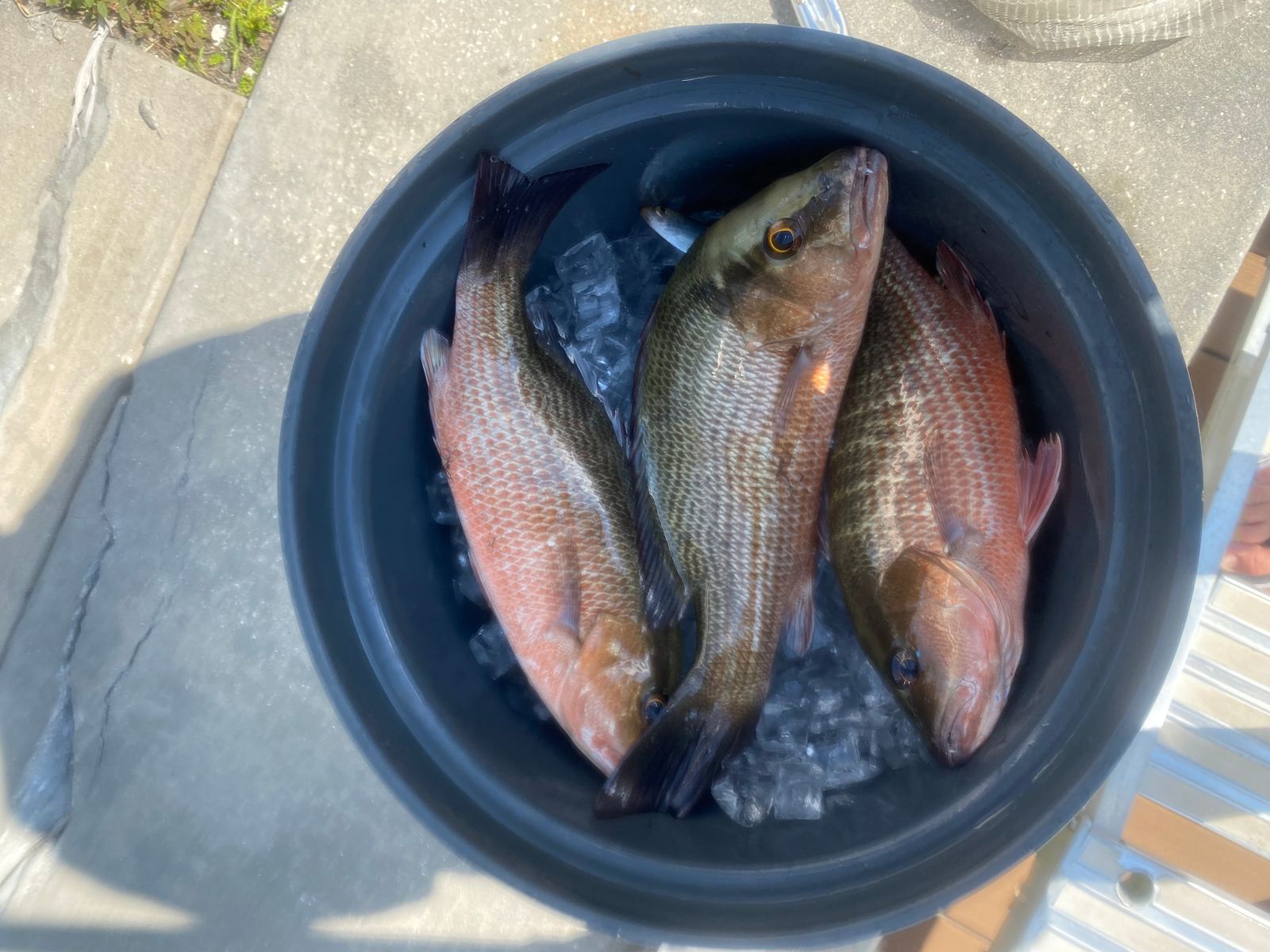
| Mangrove snapper | Every reef | Year-round, best Jun–Aug |
| Sharks | Everywhere bait is | May–Sep |
Who suits a nearshore trip?
Groups that have done the bay and want bigger fish without committing an offshore budget. Anglers who like variety — a nearshore day might sight-cast a tripletail, troll spoons through a mackerel school, and pitch a bait at a cruising cobia inside the same three hours. It is also the sea-legs test: handle 5 hours in 30 feet of water comfortably and you’re ready for the full offshore day.
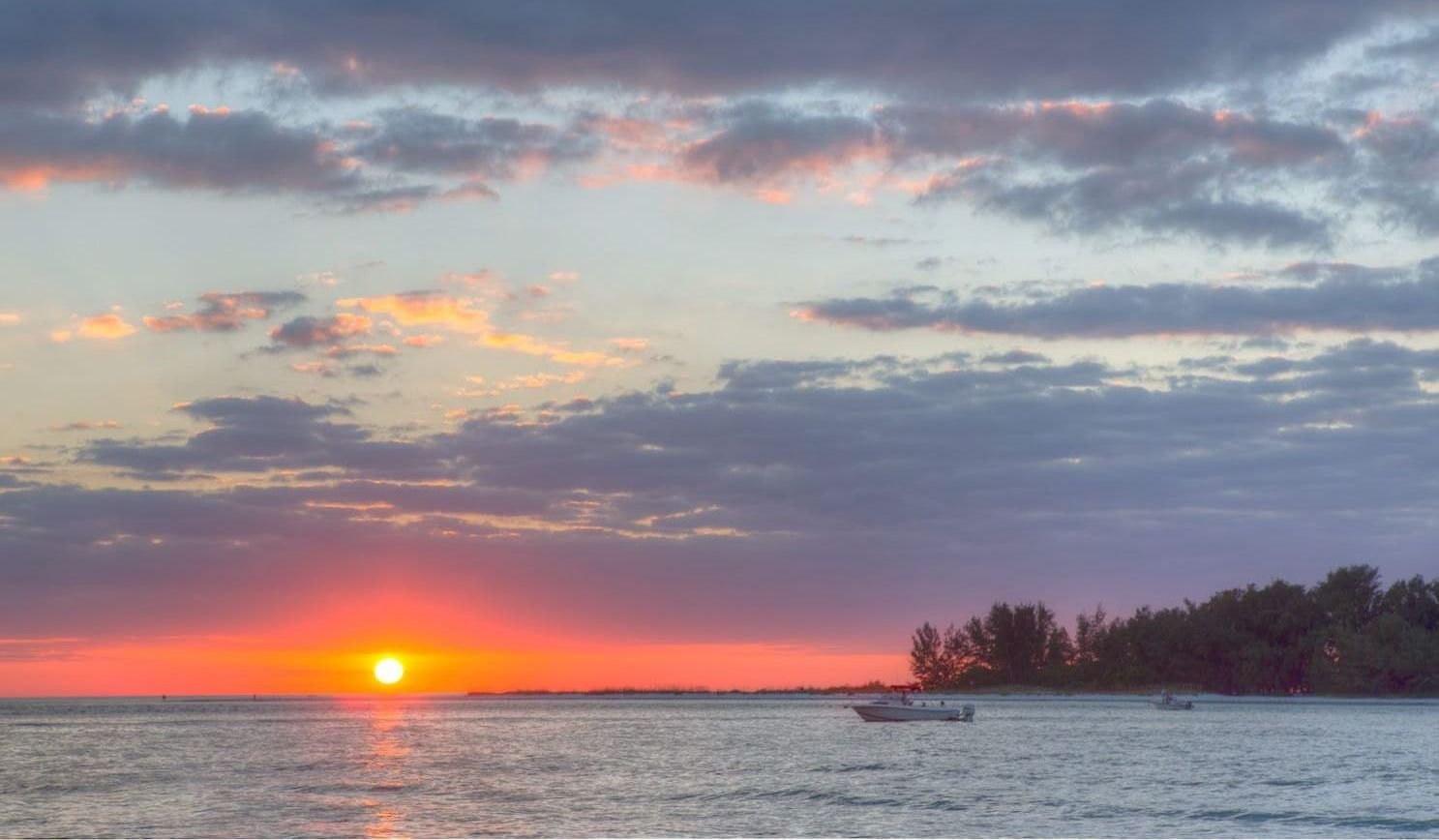
Five hours: out at first light, back before the sea breeze fills in.
What does a 5-hour nearshore trip look like?
| Time | What happens |
|---|---|
| 7:00 am | Depart; castnet threadfins off the beach or bait patch |
| 7:30–9:00 | Run the trap-buoy lines, one spotter on the bow, sight-casting tripletail |
| 9:00–10:30 | Anchor a reef: snapper, mackerel, whatever the chum raises |
| 10:30–11:30 | Troll between numbers for kings; check markers for cobia |
| 11:30–12:00 | Shark bait out while you pick at the reef; run home |
| 12:00 pm | Dock and cleaning table |
When is nearshore fishing best here?
The signature fishery runs on the stone crab calendar: traps go in Oct 15 and pull May 1, and every buoy is a potential tripletail — the fish lies on its side by the float imitating debris, and you sight-cast a live shrimp to it. April is the peak month. Rules: 18” minimum, 2 per person, hook-and-line only — details at FWC tripletail regulations. Never touch or tie to a trap or buoy; molesting traps is illegal.
Spring (Mar–May) adds the king run and the year’s best mixed bags. Summer means snapper, sharks, and glass-calm mornings. Fall repeats spring in reverse with the October king push. Winter fishes well between fronts — watch the marine forecast at NOAA/NWS Tampa Bay.
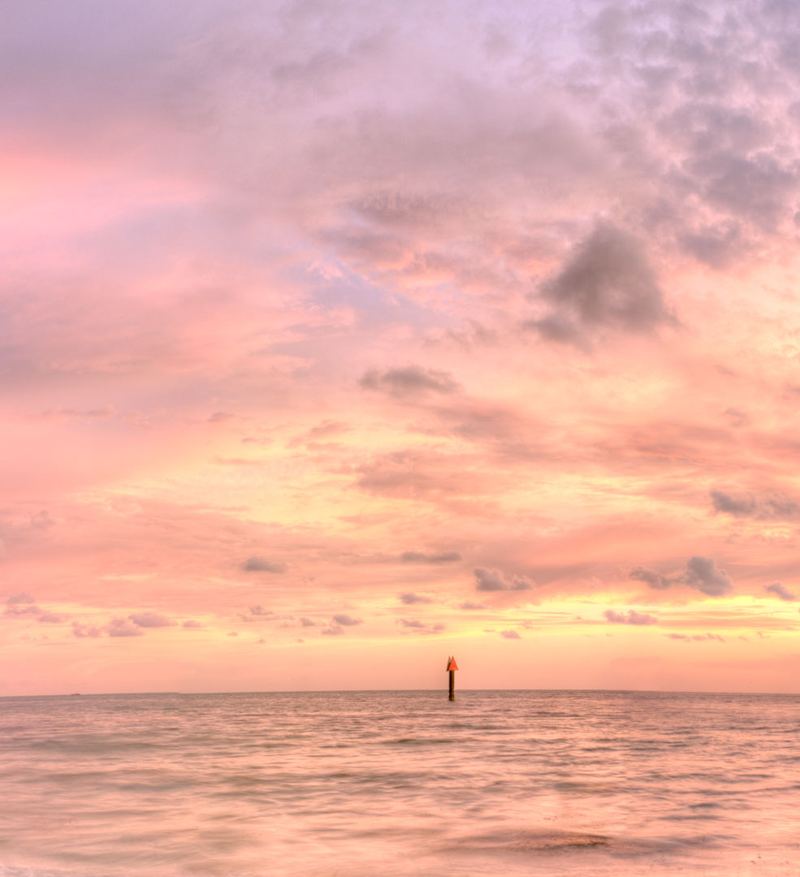
What is nearshore fishing, and how is it different from inshore or offshore?
Inshore is the bay and shallow coastal flats to a mile or two off the beach — skinny water where you sight-cast and troll shallow with light tackle. Offshore is 20 miles and beyond, deeper water where you hunt bottom fish, pelagics, and deep-structure species. Nearshore sits between: inside 9 nautical miles, fishing artificial reefs and ledges in 20–45 feet. It is the Gulf without the long ride. You get Gulf species — tripletail, king mackerel, cobia, Spanish mackerel, and sharks — with boat runs of 15–30 minutes instead of two hours. The trade-off is depth and bottom; you are fishing marked reefs and trap buoys, not sand flats or wide open water.
Nearshore matters because it is the lowest-commitment way to fish Gulf species. If you can run a bay trip and want bigger fish without committing a full offshore budget, nearshore is the move. The water depth (20–45 ft) keeps the ride smooth most mornings — the Gulf lays down calmer than any ocean coast in Florida. And the species mix never repeats: one day might hold a tripletail on trap buoys in 10 ft, a king school over a reef in 42 ft, and mangrove snapper stacked on structure, all inside the same three hours and all inside 9 miles.
How far out is a nearshore trip?
Nearshore fishing stays inside 9 nautical miles — the edge of state water — and typically runs 1 to 7 miles off the beach. The working depth is 20 to 45 feet, mostly over artificial reefs, stone crab trap lines, and hard-bottom ledges.
Your boat leaves the dock and reaches the first reef (One Mile Reef, 20 feet) in 10–15 minutes. The Seven Mile North and South reefs sit 40–45 minutes out. Beyond 9 miles you cross into federal waters — that is where the offshore charter lives.
This proximity is by design. A nearshore half day runs 4–5 hours on the water; two hours of that is fishing, not commuting. The short runs mean you fish in the morning — first light through noon — and are back at the dock before the sea breeze fills in and the Gulf gets lumpy. It also means the fleet is dense; nearshore reefs are the busiest fish real estate on this coast, which is why Sarasota County and Manatee County keep reef coordinates public and maintain them actively.
The nearshore reefs off Sarasota
The Sarasota County artificial reef program maintains the most-fished line: the M-series reefs, M-1 through M-9, running 7–9 miles off Lido and Siesta in 40–50 feet. Manatee County runs from One Mile Reef (20 ft) out to the Seven Mile North and South reefs (40–42 ft). Each reef holds year-round fish, but the peaks drive when you fish them.
| Reef | Depth | Distance | What to fish |
|---|---|---|---|
| One Mile Reef | 20 ft | 1 mile | Spanish mackerel, cobia, snapper in spring and fall |
| Three Mile North | 30 ft | 3 miles | Spring and fall king migration line; bait stacker |
| Seven Mile North & South | 40–42 ft | 7 miles | Prime slow-troll water for kings both runs |
| M-series (M-1–M-4) | ~40 ft | 7–8 miles | Straight out of Big Pass; reef line you can work one tide |
| Silvertooth Reef | 30 ft | 1.8 nm off New Pass | Spring/fall Spanish mackerel and king roost |
All coordinates are public: Sarasota County artificial reef page; full GPS list at Florida Go Fishing’s Sarasota reef directory.
Spring runs (March–May) bring kings and Spanish mackerel hunting bait over the structure. Cobia show April–May on markers and open water off the reef edges. Summer keeps mangrove snapper thick on every reef, and sharks move in during warm months. Fall (October–November) repeats spring in reverse, with the October king push plus tripletail on the nearby stone crab trap lines only 5–10 miles south in shallower water.
Nearshore fishing from Siesta Key
Siesta Key is one of the two closest access points to the prime nearshore reefs and home to much of the Sarasota charter fleet. From Siesta’s beaches and passes, the Sarasota County M-reef line runs 7–9 miles offshore in 40–50 feet. Captains launching from Siesta Marina are on the reefs in 30–40 minutes.
The spring and fall runs (March–May and October–November) are when Siesta nearshore charters load out heaviest. King mackerel mill the M-reefs on slow trolls of live bait. Spanish mackerel work bait schools and the beach edge if you run north toward New Pass or south toward Casey Key. Cobia cruise the markers and open water in April and May. Year-round, you have mangrove snapper on the reef structure and sharks thick in summer months.
Winter (January–February) off Siesta means tripletail sight-casting on the stone crab trap lines in 10–30 feet — the same launch angle, shallower water, October 15 through May 1. That fishery is one of the coast’s closest things to a pure visual hunt: run the buoy lines with a spotter on the bow, find a tripletail lying on its side by a float, and make one cast with a live shrimp. April is peak, and November–December are strong winter months. The reefs themselves hold cobia and Spanish mackerel in spring and fall, making Siesta a one-stop charter origin for everything nearshore.
Spring and fall nearshore runs
The best nearshore weeks come on the seasonal migrations. Spring (March–May) is keyed to water temperature crossing 68°F — typically late March. By April, the water hits low 70s and the kings pack the nearshore reefs on the northbound run. Spanish mackerel flood the same M-reefs and beaches. Cobia arrive in March and peak in April–May, cruising markers and rays off the beach. A spring nearshore day can hold all three plus snapper in the mix.
Fall (October–November) is often the bigger-fish run. Kings move through again heading south, pushed by cooling water and the fall bait flush out of the bay. Spanish mackerel repeat the spring pattern. By late October, the stone crab trap lines redeploy offshore, and the tripletail season restarts. A fall charter off Siesta or Longboat in October hits kings on the reefs, Spanish along the beaches, and sets up for the winter tripletail fishery if you want to come back in November.
April and October are the two peak months for versatility and size — you can fish four different species in one tide without changing location.
Different boats and captains price differently, and rates and availability change constantly — text us for current, accurate pricing on your dates.
Ranges, not quotes — the boat, the captain, and the season all move the number, and we work with everything from budget-friendly operations to high-end boats with specialist captains. If price is the limiting factor, tell us and we will find something that fits. Full breakdown: charter prices guide.
Related
Species detail lives on the tripletail, cobia, spanish mackerel, and king mackerel pages. The sight fishing technique guide is the tripletail skill; trolling covers the mackerel spread. Calmer options: the inshore charter stays in the bay, and the kids and family trip is built for young crews. Bigger appetite? The offshore page covers the 20–40 mile grounds.
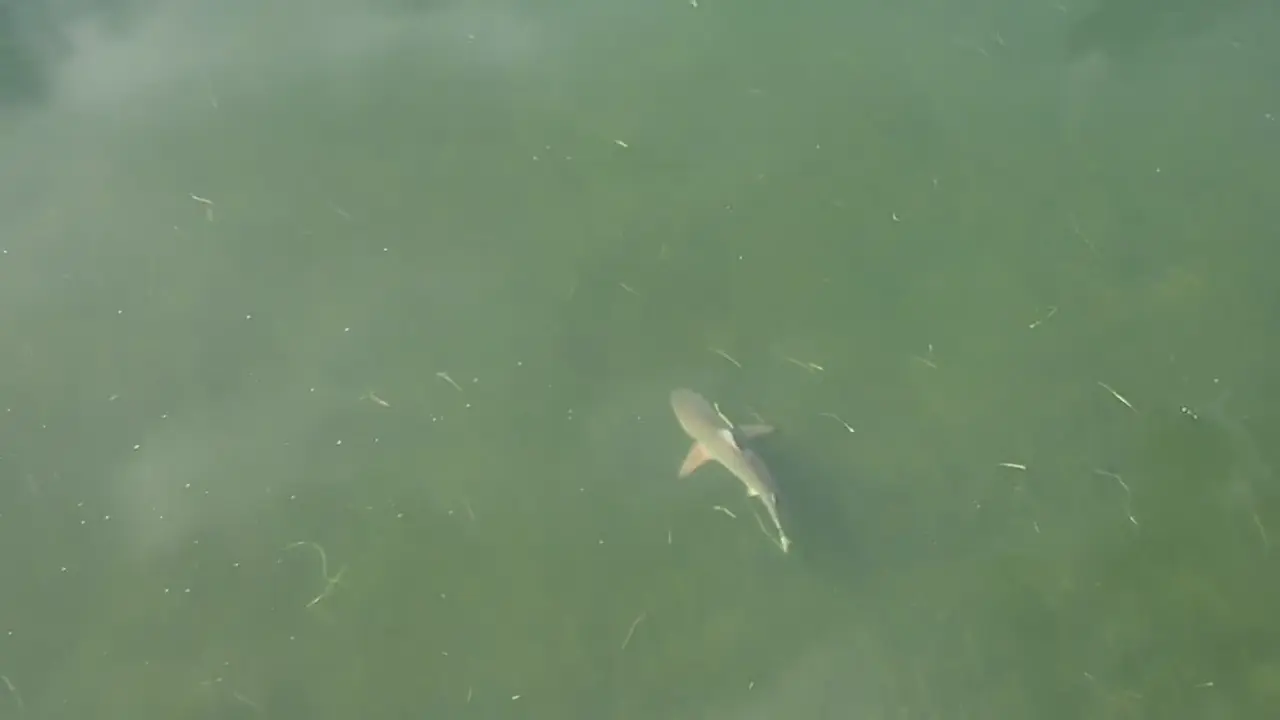
Warm months, blacktips and bull sharks work the nearshore reefs.
On the Water.
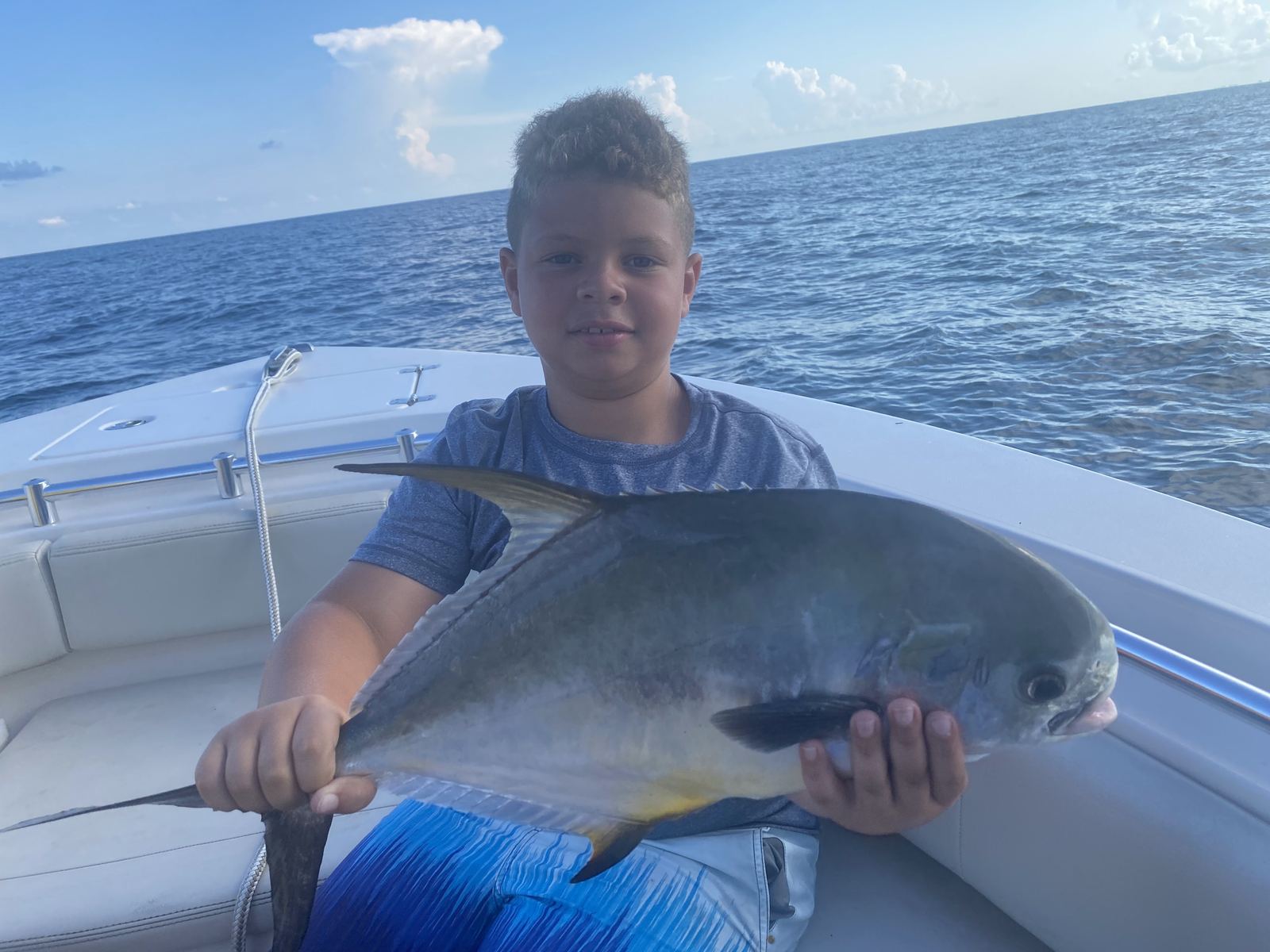
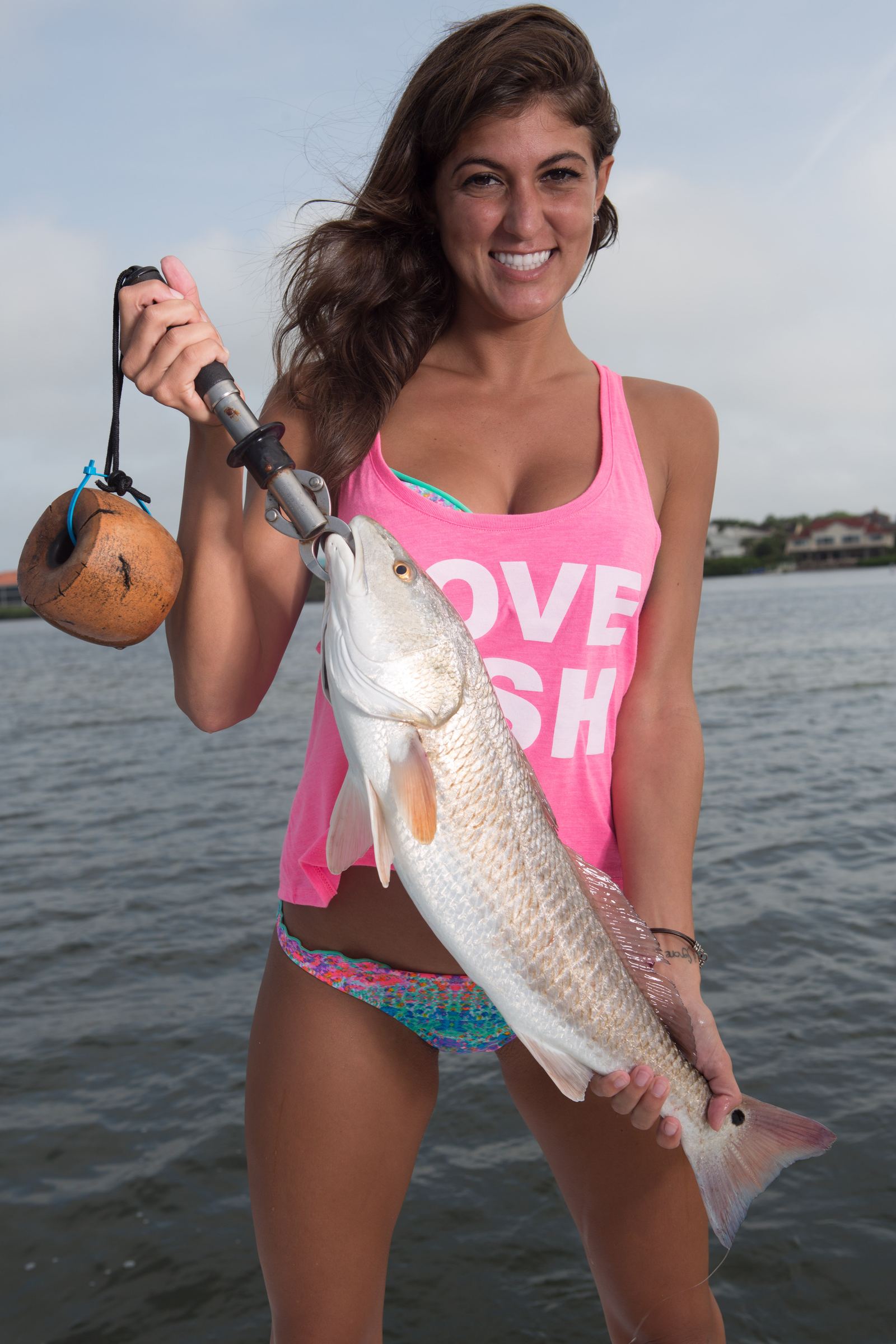
What the nearshore reefs inside 9 miles hold.
Nearshore by Location.
Nearshore FAQ.
What is the difference between nearshore and offshore fishing?
What do you catch nearshore off Sarasota?
How rough is it 5 miles out?
Is a nearshore trip good for kids?
What does a nearshore charter cost in 2026?
Book a Nearshore Trip.
Send an inquiry pre-filled for a nearshore charter and we'll match you with the right boat and captain for your group — or call and talk it through first.